The Addison Physiotherapy & Sports Injury

Do I Need an MRI for Shoulder Pain?

health blog

Articles about our physiotherapy, massage, sports medicine, and dietetic services.

Date

September 23, 2026

TITLE

Do I Need an MRI for Shoulder Pain?

AUTHOR

The Addison Physiotherapy & Sports Injury

CONNECT

Most people notice gradual improvement as shoulder strength and function improve.

Most people with shoulder pain don't need an MRI straight away. In many cases, a thorough physiotherapy assessment provides enough information to diagnose the problem and begin effective treatment without waiting for imaging.

It's common to think that a scan is needed to identify what's causing shoulder pain. However, research shows that many people have tendon tears, arthritis or bursitis on MRI despite having no pain at all. For this reason, MRI findings should always be interpreted alongside your symptoms and physical examination.


At The Addison Physiotherapy, we perform comprehensive shoulder assessments to determine whether imaging is necessary or whether treatment can begin immediately.


Key Takeaways


  • Most shoulder pain can be diagnosed without an MRI.
  • MRI findings don't always explain why your shoulder hurts.
  • Many tendon tears and arthritic changes are painless.
  • Physiotherapy is often the best first step.
  • Imaging is recommended when it will change treatment decisions.


Is an MRI Helpful?


An MRI provides detailed images of the muscles, tendons, ligaments and cartilage around the shoulder.

Your doctor or physiotherapist may recommend an MRI if:


  • You suffered a significant traumatic injury.
  • A full-thickness rotator cuff tear is suspected.
  • There is significant weakness after an injury.
  • Symptoms haven't improved despite appropriate rehabilitation.
  • Surgery is being considered.
  • Another serious shoulder condition needs to be excluded.


In these situations, an MRI can provide valuable information to guide your management.


When is an MRI usually NOT needed?


For many common shoulder conditions, treatment can begin without imaging.

Examples Include:


  • Rotator cuff tendinopathy
  • Shoulder bursitis
  • Shoulder impingement
  • Mild AC joint irritation
  • Biceps tendinopathy


These conditions are often diagnosed accurately through your history, movement assessment and strength testing.


Starting physiotherapy early is usually more important than waiting for a scan.


What if my MRI shows a tear?


This is one of the most common concerns we hear.


Finding a tear on MRI doesn't automatically mean it's the source of your pain.


Research has shown that many adults, particularly over the age of 40, have partial rotator cuff tears or tendon degeneration without experiencing any symptoms.

Your MRI should always be interpreted alongside:


  • Your symptoms
  • Your strength
  • Your shoulder movement
  • Your functional limitations


Treating the scan rather than the person can sometimes lead to unnecessary concern or treatment.


Can physiotherapy diagnose shoulder injuries?


Yes.


Physiotherapists are trained to assess shoulder pain through:


  • A detailed history
  • Movement assessment
  • Strength testing
  • Special clinical tests
  • Functional assessment


In many cases, this provides enough information to confidently diagnose the problem and begin treatment immediately.


If imaging is required, we'll explain why and refer you back to your GP or specialist where appropriate.


How is shoulder pain treated without an MRI?


Treatment is based on your symptoms and physical assessment rather than relying solely on imaging findings.

Treatment usually includes:


Education


Helping you understand your diagnosis and recovery expectations.

Load Management


Modifying activities that aggravate your shoulder while maintaining movement.

Progressive Strengthening


Improving the strength of the rotator cuff and surrounding muscles to restore shoulder function.

Return to Activity


Gradually progressing back to work, sport or the gym as your shoulder improves.


Most people notice significant improvement with this approach regardless of whether imaging has been performed.

Can I recover without knowing exactly what's on my MRI?


Absolutely.


For many shoulder conditions, rehabilitation focuses on improving how your shoulder functions rather than trying to change what appears on a scan.


Many people recover completely despite ongoing MRI findings.


The goal is improving your pain, movement and strength—not achieving a "normal" scan.

Frequently Asked Questions

  • Can an MRI miss shoulder injuries?

    MRI is highly accurate for many shoulder conditions, but no test is perfect. Clinical assessment remains an essential part of diagnosis.

  • Should I get an ultrasound instead?

    Ultrasound can be useful for assessing tendons and bursae, but the most appropriate imaging depends on your symptoms and clinical findings.

  • If my MRI shows arthritis, is that causing my pain?

    Not necessarily. Many people have arthritis visible on imaging without experiencing any symptoms.

  • Should I have an MRI before seeing a physiotherapist?

    Usually not. A physiotherapy assessment often determines whether imaging is needed in the first place.

  • Why Choose The Addison?

    At The Addison Physiotherapy, we believe great assessment comes before great treatment. Rather than relying solely on imaging, we take the time to understand your symptoms, examine how your shoulder moves and identify the factors contributing to your pain.


    If imaging is required, we'll explain why. If it isn't, we'll help you begin treatment immediately so you can start recovering sooner.


Not Sure Whether You Need a Scan?


If you're experiencing shoulder pain and wondering whether an MRI is necessary, our experienced physiotherapists can help.


Book an appointment with The Addison Physiotherapy for a comprehensive shoulder assessment and an evidence-based treatment plan tailored to your goals.


Related Articles


Person tying shoelaces on green running shoes outdoors on grass.
By Ben Marinozzi • September 29, 2026
Shin pain is common in runners, but not every sore shin is shin splints. Learn when you can keep running and when shin pain needs assessment.
Hands tying a tan sneaker on a foot in green grass
By Ben Marinozzi • September 29, 2026
Learn why your Achilles hurts when running. Our team offers tailored rehab strategies to strengthen your calf and improve performance.
Person stretching on grass, hands on knees, wearing black leggings and a black wristband.
By Ben Marinozzi • September 29, 2026
Knee pain when running? Learn what runner’s knee is, why it develops and how physiotherapy can help you keep running and build back capacity.
Woman in blue sports bra lifting dumbbells in a gym
By The Addison Physiotherapy & Sports Injury • September 23, 2026
Learn effective shoulder exercises for pain relief and recovery. Consult our experts at The Addison Physiotherapy for personalized guidance.
Woman receiving a shoulder massage in a bright room, with another person in the background
By The Addison Physiotherapy & Sports Injury • September 23, 2026
Learn why your shoulder clicks & when to seek help. Contact us for expert physiotherapy assessment & tailored treatment.
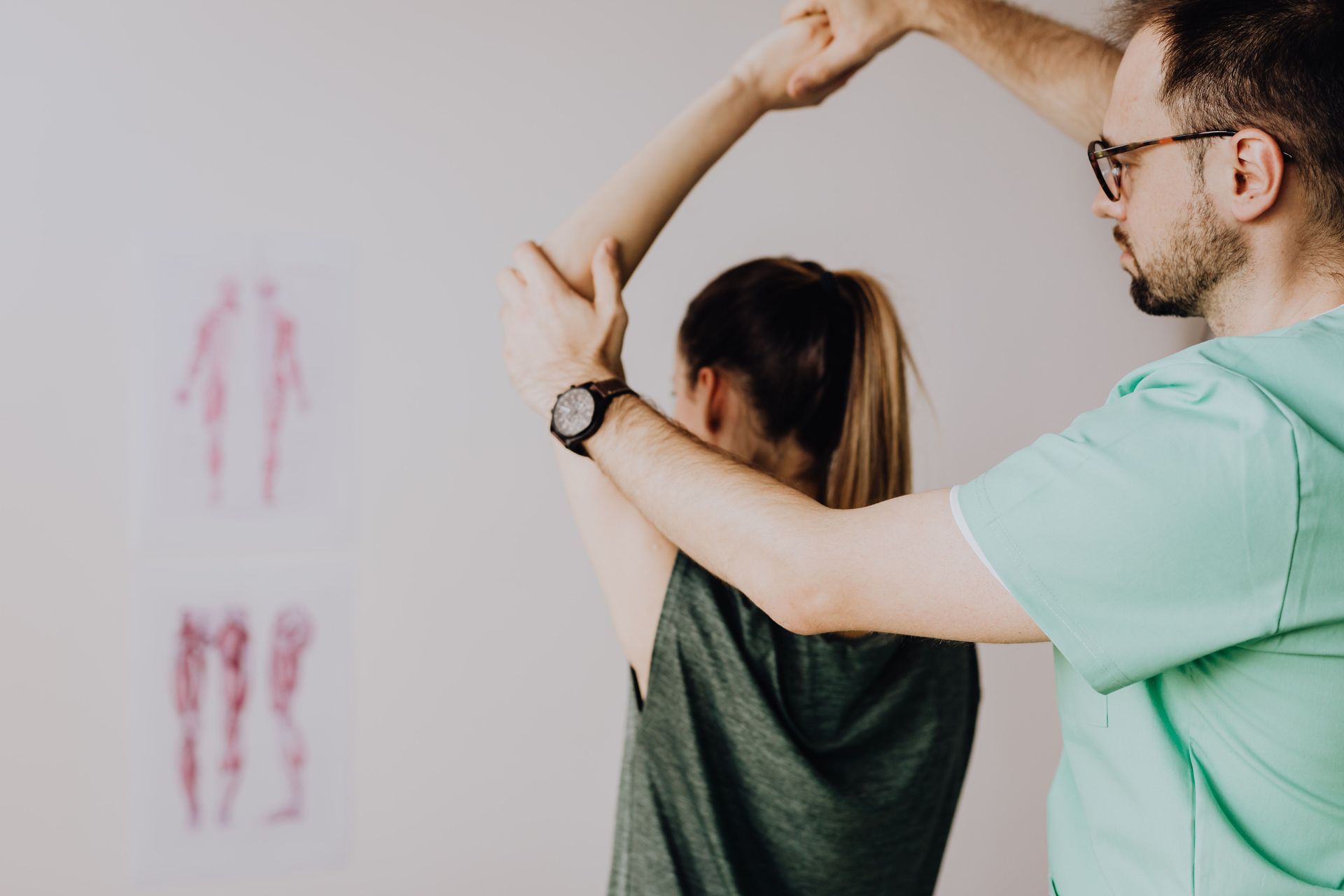
Physical therapist helping a patient stretch an arm in a clinic, with posture marks on the wall
By The Addison Physiotherapy & Sports Injury • September 16, 2026
Learn what shoulder instability is, why it develops, common symptoms, and how physiotherapy can help prevent repeated shoulder dislocations. Shoulder dislocation
Man in coral shirt stretching his arm on an outdoor tennis court
By The Addison Physiotherapy & Sports Injury • September 16, 2026
Learn about shoulder arthritis, common symptoms, treatment options and how physiotherapy can help reduce pain and improve shoulder function. Glenohumeral arthritis
Man using a cable machine in a gym, arm extended, with yellow equipment and blurred weights in the background
By The Addison Physiotherapy & Sports Injury • September 16, 2026
Shoulder pain during gym training? Learn the common causes of gym shoulder pain, what exercises to avoid, and how physiotherapy can help you keep training
Man clutching his shoulder on a beach, wearing a red sling and grimacing in pain
By The Addison Physiotherapy & Sports Injury • September 9, 2026
Learn why shoulder pain develops after swimming, the common causes, and how physiotherapy can help you return to the pool pain-free. Swimmer's shoulder The Addison
Person curled up on a bed with a blue blanket, resting face down on white sheets.
By The Addison Physiotherapy & Sports Injury • September 9, 2026
Waking with shoulder pain at night? Learn the common causes of nighttime shoulder pain and how physiotherapy can help you sleep comfortably again Night shoulder pain
Show More