The Addison Physiotherapy & Sports Injury

Why Does My Shoulder Click?

health blog

Articles about our physiotherapy, massage, sports medicine, and dietetic services.

Date

September 23, 2026

TITLE

Why Does My Shoulder Click?

AUTHOR

The Addison Physiotherapy & Sports Injury

CONNECT

Shoulder clicking is very common and, in most cases, isn't something to worry about. However, if clicking is accompanied by pain, weakness or a feeling of instability, it may indicate an underlying shoulder problem that should be assessed.

Many people notice clicking, popping or cracking when lifting their arm, reaching overhead or rotating the shoulder. Sometimes it's completely painless, while other people experience discomfort during certain movements.


At The Addison Physiotherapy, we regularly assess people experiencing shoulder clicking. Our role is to determine whether the clicking is a normal movement of the joint or whether it's being caused by an injury requiring treatment.


Key Takeaways


  • Painless shoulder clicking is usually normal.
  • Clicking with pain may indicate an underlying shoulder injury.
  • Rotator cuff injuries, bursitis and labral tears can all cause painful clicking.
  • A thorough assessment is often more useful than imaging alone.
  • Physiotherapy can address the underlying cause and improve shoulder function.


What causes shoulder clicking?


The shoulder is a complex joint made up of muscles, tendons, ligaments and cartilage working together. Clicking can occur when one of these structures moves over another during shoulder movement.

Common causes include:


  • Tendons moving over bony structures
  • Rotator cuff tendinopathy
  • Shoulder bursitis
  • Labral injuries
  • Shoulder instability
  • Tight muscles around the shoulder
  • Shoulder arthritis


In many people, clicking occurs simply because of normal movement within the joint and isn't associated with any damage.


What are the symptoms of shoulder clicking?


People commonly experience:


  • When lifting the arm overhead
  • During bench press or overhead press
  • While swimming or throwing
  • Reaching behind your back
  • During shoulder rotations


If the clicking is painless and doesn't affect your strength or movement, it's often considered a normal finding.


However, clicking associated with pain, catching, locking or a feeling that the shoulder is slipping should be assessed.


When should I see a physiotherapist?


It's worth booking an assessment if:


  • Clicking is accompanied by pain.
  • Your shoulder feels unstable.
  • You're losing strength.
  • The shoulder catches or locks.
  • Symptoms developed following an injury.
  • Clicking is affecting your ability to exercise or work.


A physiotherapy assessment helps determine whether the clicking is harmless or related to an underlying shoulder condition.


Do I need imaging?


Usually, no.


Many people with shoulder clicking don't require imaging.


An MRI or ultrasound may be recommended if:


  • A labral injury is suspected.
  • The shoulder repeatedly dislocates or feels unstable.
  • There is significant weakness.
  • Symptoms fail to improve with rehabilitation.


Imaging should always be interpreted alongside your symptoms and clinical examination.


How is shoulder clicking treated?


Treatment depends on the cause of the clicking.


If the clicking is painless, treatment may not be required.

Treatment usually includes:


Education


Understanding why your shoulder is clicking and whether it's something that requires treatment.

Load Management


Temporarily modifying aggravating activities while symptoms settle.

Progressive Strengthening


Improving rotator cuff strength and shoulder blade control helps improve shoulder stability and often reduces painful clicking.

Return to Activity


Gradually returning to work, sport and gym exercises as shoulder strength and confidence improve.


The goal is to improve how the shoulder functions rather than simply eliminating the clicking.

Can I keep exercising?


Usually, yes.


If your shoulder clicks without pain, it's generally safe to continue exercising.


If clicking is painful, certain exercises may need temporary modification while rehabilitation is underway.


Your physiotherapist will advise which movements are appropriate and how to safely progress your training.

How long does recovery take?


Recovery depends on the underlying cause of your symptoms.

Condition Typical Recovery
Painless clicking No treatment
Rotator cuff-related pain 6-12 weeks
Shoulder instability 3-6 months

Most people notice gradual improvement as shoulder strength and function improve.

Frequently Asked Questions

  • Is shoulder clicking normal?

    Yes. Painless clicking is extremely common and is often a normal feature of shoulder movement.

  • Why does my shoulder click but not hurt?

    This is usually caused by tendons or soft tissues moving over each other during normal movement and generally isn't a cause for concern.

  • Should I stop exercising if my shoulder clicks?

    Not if it's painless. If clicking is accompanied by pain, it's worth having your shoulder assessed before continuing heavy training.

  • Can physiotherapy stop my shoulder clicking?

    If the clicking is related to poor shoulder control or an underlying injury, physiotherapy often helps reduce symptoms and improve shoulder function. 


    However, harmless clicking may remain, even after your shoulder has fully recovered.

  • Why Choose The Addison?

    At The Addison Physiotherapy, we understand that hearing or feeling your shoulder click can be concerning. Our physiotherapists will determine whether the clicking is simply a normal variation or a sign of an underlying shoulder condition requiring treatment.


    Through comprehensive assessment and evidence-based rehabilitation, we'll help you return to work, the gym and sport with confidence.


Concerned About Your Clicking Shoulder?


If your shoulder is clicking and causing pain, weakness or instability, our experienced physiotherapists are here to help.


Book an appointment with The Addison Physiotherapy for a comprehensive shoulder assessment and an individual rehabilitation plan tailored to your needs.


Related Articles


Person tying shoelaces on green running shoes outdoors on grass.
By Ben Marinozzi • September 29, 2026
Shin pain is common in runners, but not every sore shin is shin splints. Learn when you can keep running and when shin pain needs assessment.
Hands tying a tan sneaker on a foot in green grass
By Ben Marinozzi • September 29, 2026
Learn why your Achilles hurts when running. Our team offers tailored rehab strategies to strengthen your calf and improve performance.
Person stretching on grass, hands on knees, wearing black leggings and a black wristband.
By Ben Marinozzi • September 29, 2026
Knee pain when running? Learn what runner’s knee is, why it develops and how physiotherapy can help you keep running and build back capacity.
Woman in blue sports bra lifting dumbbells in a gym
By The Addison Physiotherapy & Sports Injury • September 23, 2026
Learn effective shoulder exercises for pain relief and recovery. Consult our experts at The Addison Physiotherapy for personalized guidance.
Patient on MRI table while technician stands beside the scanner
By The Addison Physiotherapy & Sports Injury • September 23, 2026
Find out if you need an MRI for shoulder pain. Learn about physiotherapy assessments & effective treatment options today!
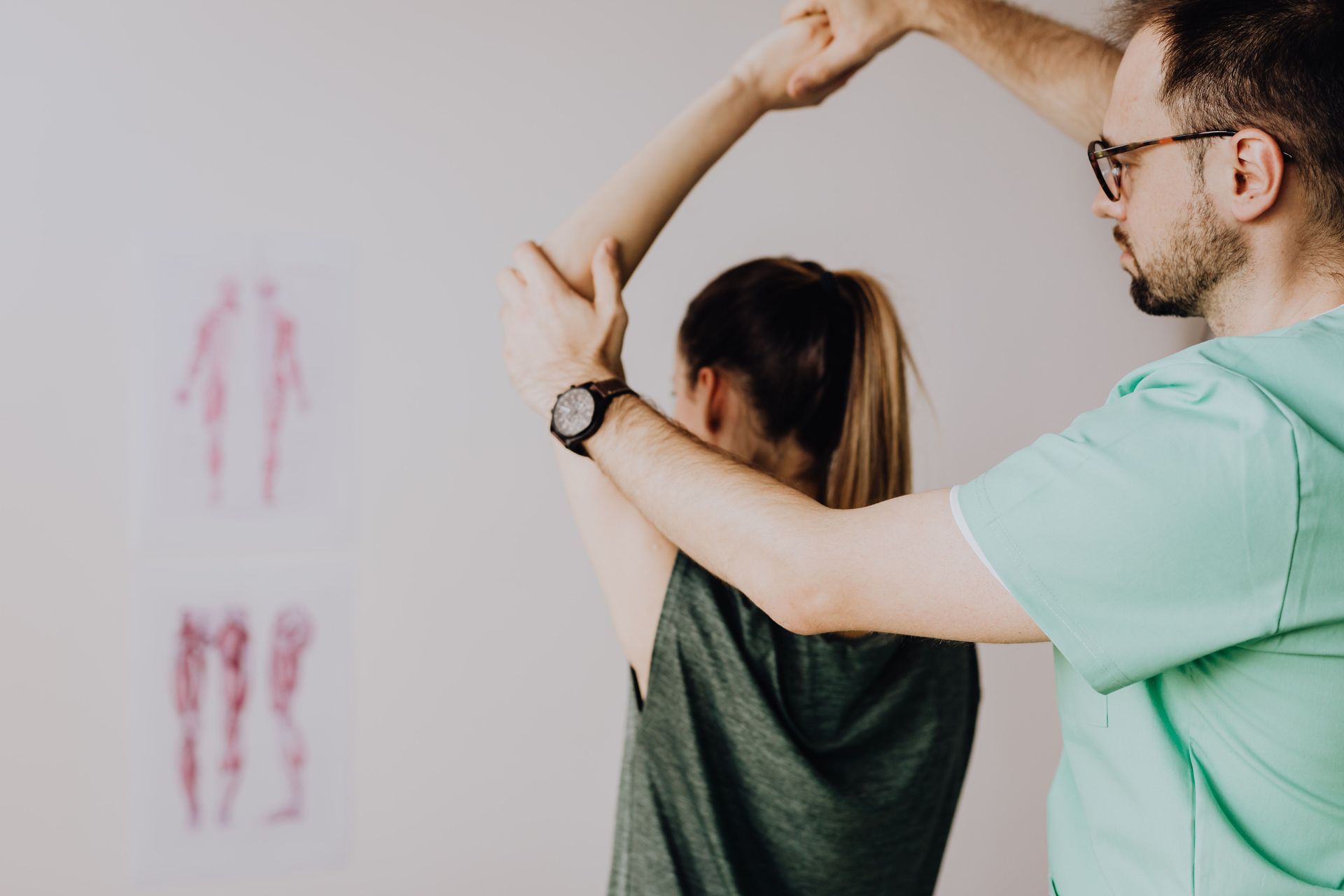
Physical therapist helping a patient stretch an arm in a clinic, with posture marks on the wall
By The Addison Physiotherapy & Sports Injury • September 16, 2026
Learn what shoulder instability is, why it develops, common symptoms, and how physiotherapy can help prevent repeated shoulder dislocations. Shoulder dislocation
Man in coral shirt stretching his arm on an outdoor tennis court
By The Addison Physiotherapy & Sports Injury • September 16, 2026
Learn about shoulder arthritis, common symptoms, treatment options and how physiotherapy can help reduce pain and improve shoulder function. Glenohumeral arthritis
Man using a cable machine in a gym, arm extended, with yellow equipment and blurred weights in the background
By The Addison Physiotherapy & Sports Injury • September 16, 2026
Shoulder pain during gym training? Learn the common causes of gym shoulder pain, what exercises to avoid, and how physiotherapy can help you keep training
Man clutching his shoulder on a beach, wearing a red sling and grimacing in pain
By The Addison Physiotherapy & Sports Injury • September 9, 2026
Learn why shoulder pain develops after swimming, the common causes, and how physiotherapy can help you return to the pool pain-free. Swimmer's shoulder The Addison
Person curled up on a bed with a blue blanket, resting face down on white sheets.
By The Addison Physiotherapy & Sports Injury • September 9, 2026
Waking with shoulder pain at night? Learn the common causes of nighttime shoulder pain and how physiotherapy can help you sleep comfortably again Night shoulder pain
Show More