If you're experiencing pain directly on the top of your shoulder, especially during bench press, push-ups, overhead lifting or sleeping on your side, the AC joint may be contributing to your symptoms. Fortunately, physiotherapy is highly effective for most people and surgery is rarely required.
At The Addison Physiotherapy, we regularly assess AC joint pain in gym-goers, athletes, manual workers and active individuals. Our goal is to identify the underlying cause, reduce irritation and help you return to your usual activities without ongoing shoulder pain.
Key Takeaways
- AC joint pain is felt on the top of the shoulder.
- It commonly develops from heavy lifting, contact injuries or arthritis.
- Bench press, push-ups and cross-body movements often aggravate symptoms.
- Most people recover with physiotherapy and exercise.
- Surgery is only required in a small number of cases.
What causes AC joint pain?
The AC joint is where the collarbone (clavicle) meets the highest point of the shoulder blade (acromion). Although it's a small joint, it plays an important role in allowing your shoulder to move normally.
AC joint pain usually develops because the joint becomes overloaded or irritated.
Common causes include:
- Heavy bench pressing
- Push-ups and dips
- Overhead lifting
- Falling directly onto the shoulder
- Contact sports
- Age-related arthritis
Repeated loading can gradually irritate the joint, while a fall onto the shoulder may cause an AC joint sprain or separation.
What are the symptoms of AC joint pain?
People commonly experience:
- Pain directly on the top of the shoulder
- Tenderness when touching the joint
- Pain reaching across the body
- Pain during bench press or push-ups
- Pain sleeping on the affected shoulder
- Pain lifting overhead
Unlike rotator cuff pain, discomfort is usually very localised to the top of the shoulder.
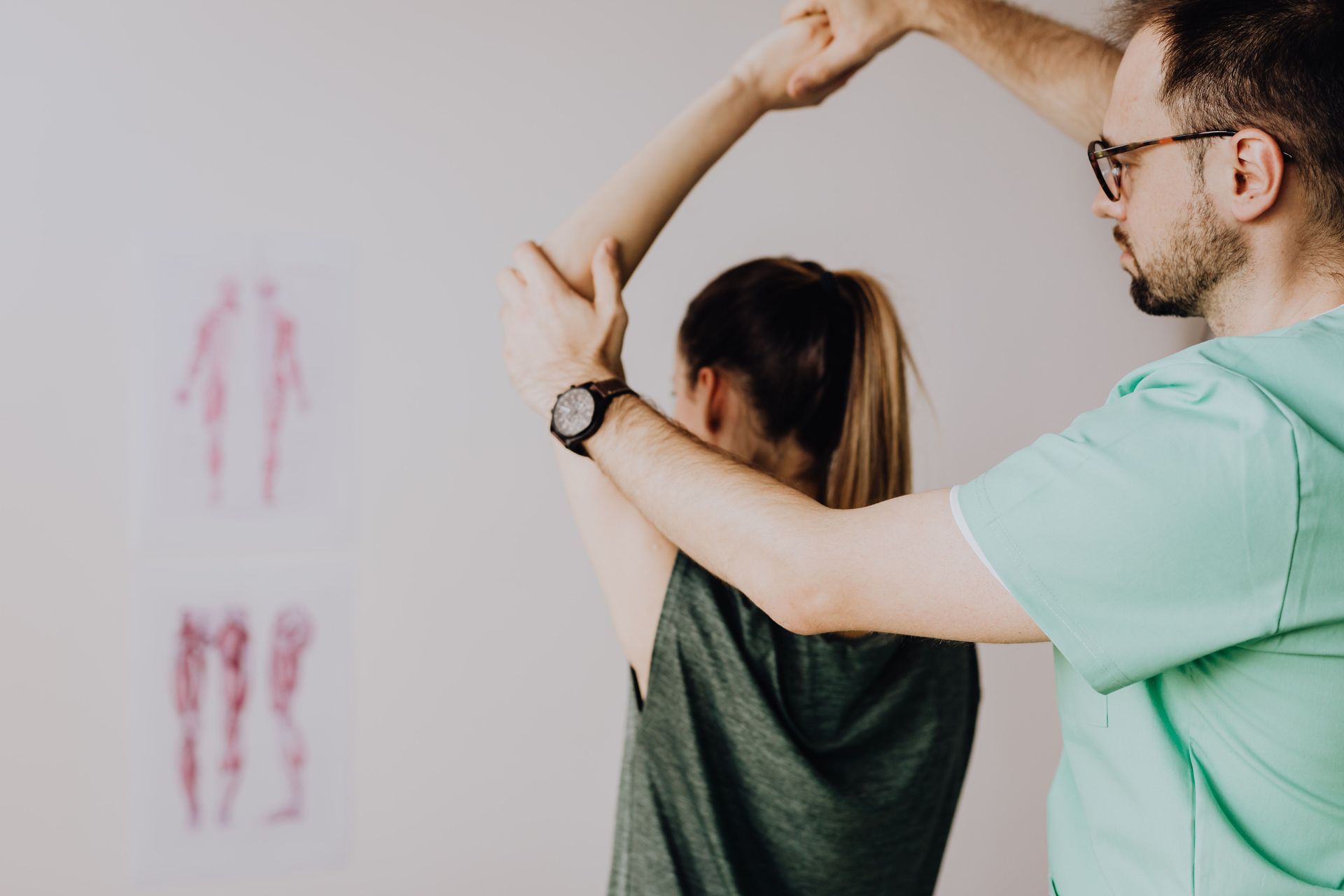
When should I see a physiotherapist?
It's worth booking an assessment if:
- Pain has lasted longer than one to two weeks.
- You're unable to train comfortably.
- The top of your shoulder remains tender.
- Pain developed after a fall.
- Symptoms continue to worsen.
Early diagnosis helps determine whether the problem is coming from the AC joint or another structure within the shoulder.
Do I need imaging?
Usually, no.
Most cases of AC joint pain can be diagnosed during a clinical assessment.
An X-ray or MRI may be recommended if:
- You sustained a significant fall or collision.
- An AC joint separation is suspected.
- Symptoms fail to improve with rehabilitation.
- Surgery is being considered.
Mild arthritis is commonly seen on imaging and doesn't always explain shoulder pain.
How is AC joint pain treated?
Treatment focuses on reducing stress through the joint while restoring shoulder strength and function.
Treatment usually includes:
Education
Understanding what activities are irritating the joint and how to modify them during recovery.
Load Management
Temporarily reducing exercises that place excessive compression through the AC joint while maintaining overall shoulder function.
Progressive Strengthening
Strengthening the rotator cuff, shoulder blade muscles and surrounding structures helps improve shoulder mechanics and reduce stress on the AC joint.
Return to Activity
Gradually reintroducing gym exercises, work tasks and sporting activities as symptoms improve.
Most people recover successfully without injections or surgery.
Can I keep exercising?
Usually, yes.
Rather than stopping training completely, temporary exercise modifications are often enough to allow the joint to settle.
Examples include:
- Reducing bench press depth
- Using dumbbells instead of a barbell
- Temporarily avoiding dips
- Modifying push-ups
- Reducing overhead lifting
Your physiotherapist will help determine which exercises you can continue safely while your shoulder recovers.
How long does recovery take?
Recovery depends on the cause of your symptoms.